
Nov 04, 2015 I'm running OS X El Capitan 10.11.1 on an early 2015 13-inch Retina MacBook Pro (MacBookPro12,1) with Boot Camp Assistant 6.0.0 (519). Need 64-bit Windows 8. BootCamp: OSX (El Capitan) and Windows 10 The only reason I'm posting this is because I was stuck for a few hours and the internet had tons of conflicting fixes for this that led me nowhere. Still stuck with GPT errors and a whole lot of general bollocks.
Is it possible to play Genshin Impact on Mac
Developed by miHoYo Limited, Genshin Impact is an open-world role-playing action released almost a month ago. From the beginning, a pair of twins is set to arrive on the land called Teyvat, a fictional place with lots of artifacts and mysteries yet to be unlocked. However, the impact of an unknown god keeps one of them trapped from leaving the place. This is where the adventure begins. Emerge yourself into a magic world full of epic bosses to beat through and reach a long-lost sibling of the main character. Perceive the power of all elements laid down in the world to defeat the most perilous and challenging monsters throughout the game. You can also unite with 3 more players to travel and explore the ubiquitous beauty of Teyvat together. Genshin Impact is a great anime-like video game accompanied by color-saturated graphics attained thanks to the Unity engine. Despite the game can be officially played across PS4, IOS, Android, and Windows for free, we will help extend this list to cover Mac users as well.
System Requirements
| Minimal | Recommended |
|---|---|
| OS: Windows 7 SP1 64-bit, Windows 8.1 64-bit or Windows 10 64-bit | OS: Windows 7 SP1 64-bit, Windows 8.1 64-bit or Windows 10 64-bit |
| Processor: Intel Core i5 equivalent or higher | Processor: Intel Core i7 equivalent or higher |
| RAM: 8 GB | RAM: 16 GB |
| Video card: NVIDIA GeForce GT 1030 and higher | Video card: NVIDIA GeForce GTX 1060 6 GB and higher |
| DirectX: from 11 version | DirectX: from 11 version |
| Disc space: 30 GB | Disc space: 30 GB |
Play Genshin Impact on Mac with Parallels
Genshin Impact requires lots of PC resources, but if you have a powerful Mac computer (iMac, iMac Pro, or Mac Pro) Parallels Desktop can be a solution. This is software for Windows virtualization on Mac with the full support of DirectX and GPUs. It allows you to install Windows 10 on Mac with a couple of clicks and switch between MacOS and Windows instantly. You can run Windows just like on a regular PC, install Steam and enjoy the Genshin Impact game on Mac.
Play Genshin Impact on Mac with Vortex.gg or Nvidia Geforce Now
Vortex.gg or Nvidia Geforce Now don’t have Genshin Impact in their catalog yet, however, there are thousands of requests from users to add it. Since it is one of the most popular games, this can be brought to life soon.
If you have an old Mac or it cannot satisfy Genshin Impact game system requirements, there is an easy solution. Cloud gaming provides you sufficient cloud resources for a fixed fee. All you need is a small client program and a good internet connection starting from 15 Mbits/s. There are several great services, that provide such an opportunity, among the best are Vortex.gg and Nvidia Geforce Now. Both services may have Genshin Impact in their game catalog soon, and you can play on any Mac computer (starting from MacOS 10.10) and even Android!
Play Genshin Impact on Mac with BootCamp
This method is simple but time-consuming. If your Mac meets the system requirements above, this is probably the best way to play Genshin Impact for now. You need to set up a dual boot of Windows and Mac via BootCamp. BootCamp allows users to choose the system to work in on startup, however, you won’t be able to switch between systems like in Parallels. You will need to reboot your machine every time you switch from Mac to Windows and vice versa. Remember that Mac is just a computer, that uses common processors, RAM, disks, and other components. So you can install Windows on Mac by allocating disc space of a minimum of 64 Gb (to be able to run Windows and a couple of games). To set up Windows via BootCamp, please, do the following:
For OS X El Capitan 10.11 or later
Mention, that for MacOS versions prior to OS X El Capitan 10.11 you will need to create bootable Windows USB.
- Download Windows ISO file
- Open Boot Camp Assistant (Go to Applications >Utilities)
- Define the Windows partition size choose downloaded Windows ISO file
- Format Windows partition and go through all Windows installation steps
- When Windows boots for the first time follow on-screen instructions to install Boot Camp and Windows support software (drivers)
If you want to know the installation of the Mac operating system, then just visit this article ” How to Perform A Clean Installation of Mac OS El Capitan? This was It was all about how dual boot Mac OS X El Capitan with Windows 10 Operating System. Dec 05, 2015 Hello, I'm currently using a non-efi card in my Mac Pro (see sig). When in Windows 10 I'm unable to use the bootcamp assistant to boot back into OS X (El Capitan). Using this option brings me back into Windows 10. I currently work round this by performing a PRAM reset to get back into OS X.
By AppleInsider Staff
Monday, February 05, 2018, 03:09 pm PT (06:09 pm ET)
- The new OS from Mac is here in OS X El Capitan. Apple's 12th OS release is the OS X El Capitan. Named after a rock formation in the Yosemite National Park, USA, OS X El Capitan continues and focuses on stability, performance and security in which OS X Yosemite started.
- May 26, 2019 If you're a Mac owner and need the functionality and features included in Windows 10, you can install it on OS X using Boot Camp. Here's a walk through. How to Install Windows 10 On Mac OS X.
 Why would you want to run Windows on an Apple machine in the first place? First of all, there's quite a large number of programs and apps that only work on Windows, especially professional software. If you're a gamer, you can't go without Windows as the selection of games on macOS is extremely limited.
So why not just buy a Windows computer? Well Apple computers are known for their reliability and they hold their value very well compared to PCs. Some people still buy used Apple laptops that are a few years old, something almost unheard of for Windows laptops.
Mac owners can use Apple's built-in Boot Camp Assistant to install Windows for free. The first-party assistant makes installation easy, but be forewarned that you will need to restart your Mac whenever you want to access the Windows provision.
Another option is Parallels Desktop, a third-party service that allows you to switch back and forth between macOS and Windows without having to reboot, but that product requires an annual subscription.
Before we begin installing Windows using Boot Camp, make sure you're on an Intel-based Mac, have at least 55GB of free disk space on your startup drive, and have backed up all of your data.
The first thing we need is a Windows disc image file, or ISO. Use Google to search and find the 'Download Windows 10 ISO' file page on Microsoft's website. Once there, select 'Windows 10,' and hit 'Confirm.' Choose your language and select '64 bit' unless you're running an older Mac that only supports 32 bit programs.
If you're not sure, click the Apple logo at the upper-left hand corner of your Mac's home screen and select 'About this Mac.' If it says 'Core Duo' in the processor section, then your Mac is 32-bit.
If you're running OS X El Capitan 10.11 or later on a Mac, Windows installation is going to be a breeze since those models use the computer's internal drive to temporarily store Windows installation files. If not, you'll need to insert a blank 16GB or larger USB flash drive or external SSD to complete the installation.
Once your ISO file is done downloading, open Spotlight Search or Launchpad and search for 'Boot Camp Assistant.'
Get Mac Os El Capitan
Click continue, then click choose and select your newly downloaded ISO file. Next, Boot Camp will ask you to adjust the size of your Windows partition. You should make it larger if you plan on downloading and playing games or using professional software.
If you're on an older Mac operating system, you'll see some options to create an install disk and download the latest Windows support software. Make sure all of them are checked, then click continue.
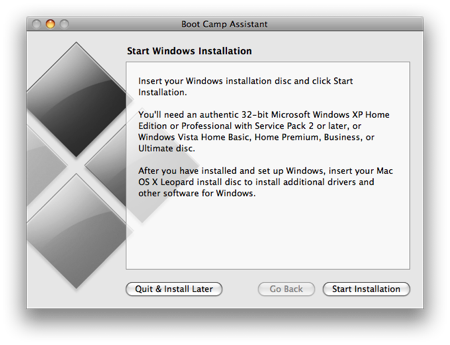
Now choose your ISO image file, and the destination disk, which is your USB Flash drive. Then click continue, choose the partition size for Windows 10, and click install.
If the installation is successful, the system will ask for your Mac's password. Make sure to save any important documents or files, as your Mac will instantly restart into Windows once you enter your password.
After the reboot, you'll be greeted with the windows setup menu. If your mouse isn't working, click a couple of times and the mouse pointer should show up.
Bootcamp Mac El Capitan
Click Next, then enter your Windows 10 activation key if you have it. If you don't have one yet, click 'I don't have a product key.' In that case, choose which version of Windows 10 you want to install. We chose Windows 10 Home. Accept the terms and click next on the next page to begin the installation.
When it's finished, Windows will automatically restart and bring you through the rest of the installation. Once at the Windows desktop, the boot camp installation program will show up. This will install all the necessary drivers for Windows to run properly.
Your system will restart one more time and then Windows is ready for use!
To get back to macOS, find boot camp at the bottom right hand corner of the screen, right click on it? And click 'Restart in MacOS'